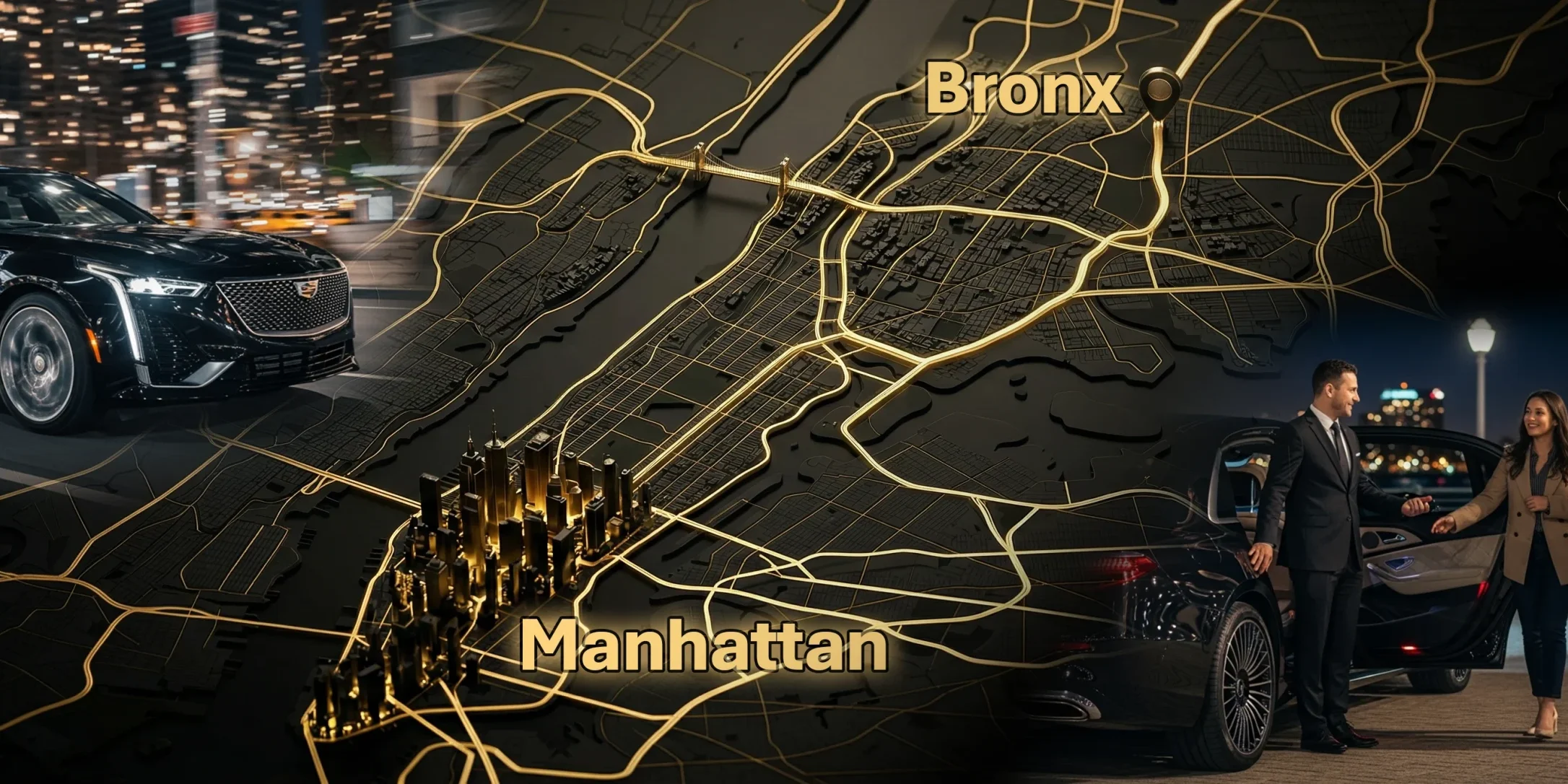
How to Get From Bronx to Manhattan: Best Routes, Costs, & Travel Tips
Here is a fact that might surprise you: during busy hours, the drive from the Bronx to Manhattan along the Major Deegan Expressway can actually be slower than taking local streets through Harlem, even though the streets have more traffic lights. Still, many ride-share and taxi drivers stick to the highway. That can add 10 to 20 minutes to your trip, just because the app on their phone points them to the biggest road.
This is why knowing how to get from Bronx to Manhattan means looking beyond what a driver or app suggests. Weekend subway work, express bus lanes, and the route your driver picks can all change how long your trip takes.
We lay out each travel choice so you can see what works best for your schedule and avoid surprises like a long detour you did not expect.
How Far Is the Bronx From Manhattan, and How Long Does It Take?
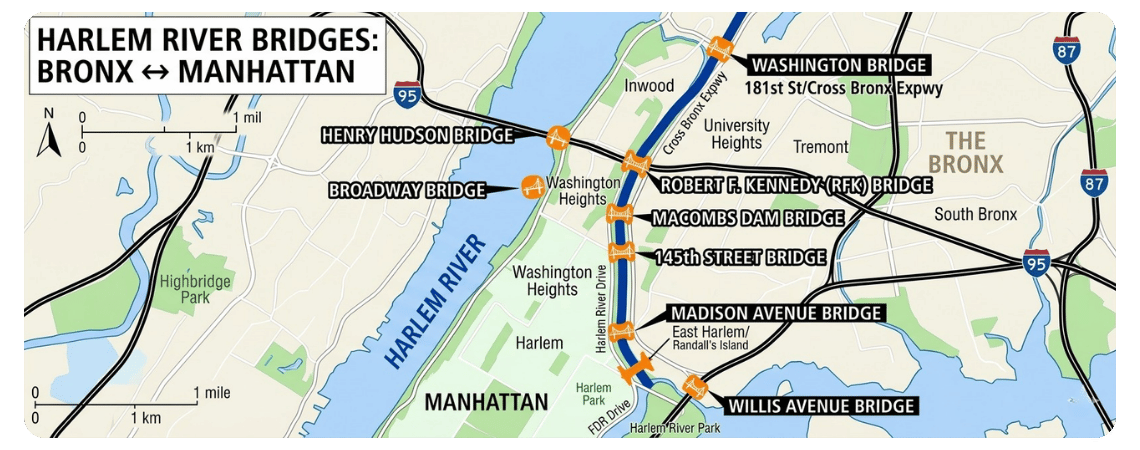
If you are visiting New York City, you might be wondering about the distance between the Bronx and Manhattan. The good news is that the two boroughs are connected by bridges and tunnels that cross the Harlem River, which is the waterway that separates them.
Because they are so close, the physical distance is short. However, the time it takes to get from one to the other can be very different depending on how you travel and where you start. To help you plan, here are the three main things that will affect your trip:
1. Your Starting Neighborhood in the Bronx
The Bronx is a large borough, so your travel time depends on whether you are starting in the south or the far north.
- From the South Bronx: If you begin in the neighborhoods closest to Manhattan, such as Mott Haven or Port Morris, your trip will be very short. You are already next to the bridges that lead into Manhattan.
- From the North Bronx: If you begin in the northern parts of the borough, such as Riverdale or Co-op City, you will need more time to travel down to the connection points.
2. Traffic Conditions
If you are traveling by car, taxi, or rideshare, the time it takes can change dramatically depending on the time of day.
- Off-peak hours: When traffic is light, the drive can be quick and easy.
- Busy hours (rush hour): During the morning and evening times when people are going to and from work, the roads become very crowded. During these times, your travel time can easily double, so it is always a good idea to allow extra time.
3. Subway and Transit Access
Many visitors prefer to take the subway because it helps them avoid traffic.
- Proximity to a station: The most important factor is how close you are to a subway station. If you are staying near a station that offers express trains, you can move through the city faster with fewer stops.
- Total travel time: Unlike driving, the subway time is usually consistent, but you should still account for the walk to the station and the wait for the train.
Summary: While the Bronx and Manhattan are geographically close, your travel time will depend on where you start, the traffic, and your access to the subway. Checking a live map app for real-time transit updates is a great way to get the most accurate estimate before you leave.
Best Ways to Travel From the Bronx to Manhattan
When choosing, consider your budget, urgency, and comfort level. Public transit is the most affordable, while a private car offers a seamless, door-to-door experience.
The table below compares the most common travel options to help you decide.
|
Option |
Cost |
Travel Time |
Best For |
|
Subway |
$2.90 per ride (set to increase to $3.00) |
20–45 min |
Daily commuters, budget travelers |
|
Bus |
$3.00 – $9.00 |
30–60 min |
Local travel, short distances |
|
Taxi |
$30 – $55 + tolls & tip |
20–40 min |
Direct trips, convenience |
|
Ride-share |
$25 – $45 + possible surge pricing |
20–45 min |
App-based rides, flexible timing |
|
Private Car Service |
$45 – $80 (base fare, often includes tolls) |
20–40 min |
Comfort, reliability, and special occasions |
Subway Routes That Get You Into Manhattan Quickly
The subway runs on a set schedule and does not get stuck in traffic, which makes your travel time much more predictable.
Several subway lines connect the Bronx to different parts of Manhattan. Which one you take depends on where in Manhattan you want to go:
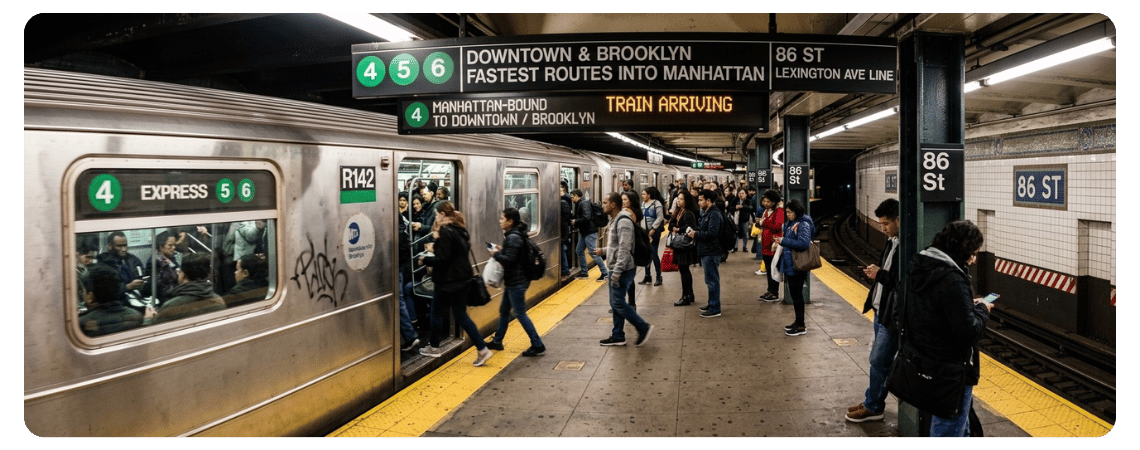
- 4, 5, and 6 trains: These trains will take you to the East Side of Manhattan. This includes areas like Grand Central Terminal, the United Nations, and the Upper East Side. The 4 and 5 trains are usually express trains, meaning they make fewer stops and move faster, while the 6 train makes local stops along the same path.
- B and D trains: These trains provide access to the West Side of Manhattan. They will take you near popular destinations like Central Park West, the Museum of Natural History, and Columbus Circle.
- 1, 2, and 3 trains: These trains run along Broadway and also serve the West Side of Manhattan. They are useful for reaching neighborhoods like the Upper West Side, Times Square, and the Financial District. The 2 and 3 trains are express trains, while the 1 train makes local stops.
Advantages of the Subway:
- Fast and frequent: Trains come regularly throughout the day, so you rarely wait long.
- Budget Friendly: The subway is the cheapest way to travel between the Bronx and Manhattan, with a single ride costing $2.90.
- Avoids traffic: Since the subway runs underground or on elevated tracks, it is not affected by car traffic or bridge congestion.
Limitations to Keep in Mind:
- Can be very crowded: During rush hours , trains can become packed with commuters.
- Less convenient with luggage: Many subway stations in the Bronx and Manhattan do not have elevators or escalators. If you are traveling with large suitcases, you may need to carry them up and down stairs.
How to get from Bronx to Manhattan: Bus Routes
If you prefer to stay above ground, the MTA buses offer another way to travel between the two boroughs. There are two main types of buses you will encounter:
- Local buses: These make frequent stops and are good for shorter trips.
- Express buses: These are designed for longer trips. They make fewer stops and often use highways to get you into Manhattan more directly. Express buses are usually labeled with a “BxM” followed by a number (for example, BxM1, BxM2).
Pros of Taking the Bus:
- Low cost: Bus fares are the same as subway fares, making it an affordable option.
- Useful for specific locations: Buses can take you closer to a specific address than the subway might, which is helpful if you are not near a train station.
Cons to Consider:
- Slower than the subway: Buses must share the road with cars, trucks, and taxis. Because of this, they can get stuck in traffic, which makes travel times less predictable.
- Delays possible: During busy hours or if there is construction, your trip may take longer than expected.
Taking a Taxi or Ride-Share for a Direct Trip
If you want a simple, private option without the need to walk to a station or transfer between trains, you can take a yellow taxi or a ride-share service like Uber or Lyft.
Benefits of Taxis and Ride-Shares:
- Door-to-door convenience: This is the main advantage. You can be picked up from your exact location in the Bronx and dropped off directly at your destination in Manhattan. This is especially helpful if you are traveling with heavy luggage, have mobility concerns, or are visiting during bad weather.
How Pricing Works:
The cost is not a fixed rate. Instead, it changes based on three factors:
- Distance traveled: The further you go, the higher the fare.
- Current traffic: If the roads are busy and the car is moving slowly, the trip takes longer, which increases the cost.
- Demand for rides: During peak times, such as late nights, holidays, or during rainstorms, ride-share apps often use surge pricing, which raises the price significantly.
- A typical trip can range from $30 to $70 or more, especially during peak hours.
Tip: If you are traveling during a busy time, it is a good idea to check the app for an estimated price before booking. For yellow taxis, you can ask the driver for an estimated cost before starting the trip, though the final fare will depend on the meter.
When a Private Car Service Is Worth It
A private car service is a transportation option that you book in advance. Unlike a taxi or ride-share, where you request a car when you are ready to go, a private car service is scheduled ahead of time. This gives you a higher level of comfort and reliability.
With this option, a professional driver arrives at your chosen location at a set time. You do not have to wait for a car to become available, and you do not need to navigate the roads yourself. The driver handles everything.
This option is especially worth considering in three situations:
- Business travelers: If you need to work, take phone calls, or prepare for a meeting while traveling, a private car service offers a quiet and private space to do so.
- Airport connections: When you have a flight to catch, punctuality is critical. A pre-arranged car ensures you leave on time and helps guarantee you arrive at the airport with plenty of time before your departure.
- Travelers with luggage: If you are carrying large suitcases, bags for a family, or heavy items, a private car service provides a hassle-free experience. You do not have to carry your luggage up and down subway stairs or worry about fitting it onto a crowded train.
Where to Catch Transportation in the Bronx
Knowing where to go to catch your ride will help you choose and access your preferred option quickly. Here are the main places to find transportation:
- Subway stations: These are widely available across all Bronx neighborhoods. Look for the green globe lamps or signs that mark station entrances.
- Bus stops: Buses stop at designated locations along major streets and avenues throughout the borough. Look for the blue and white MTA bus stop signs.
- Taxis and ride-shares: You can request a taxi or ride-share from most locations using an app on your phone. In busier areas, you may also be able to hail a yellow taxi directly from the street.
Travel Time by Bronx Neighborhood (What to Expect)
The neighborhood you start from in the Bronx significantly impacts your travel time to Manhattan. Because the Bronx stretches from north to south, your starting point determines how long it takes to reach the bridges, tunnels, and subway connections. Here is what to expect for typical travel times:
- South Bronx → Manhattan: 20 to 30 minutes. The South Bronx shares a border with Manhattan, so this is the shortest trip.
- Central Bronx → Manhattan: 25 to 40 minutes. This area includes neighborhoods like Fordham and Belmont, which are farther north but still have good transit connections.
- North Bronx → Manhattan: 40 to 60 minutes. If you are starting in areas like Riverdale or Co-op City, you will need more time to travel down to the connection points.
Setting realistic expectations based on your location will help you plan your trip better and avoid feeling rushed.
Best Times to Travel Between the Bronx and Manhattan
The time of day you choose to travel can greatly affect your experience, whether you are driving or taking public transit. Here is what to expect during different times:
- Morning rush hour (7:00 AM to 10:00 AM): Expect heavy traffic on roads and bridges. Subways heading into Manhattan are usually very crowded with commuters going to work.
- Evening rush hour (4:00 PM to 7:00 PM): Similar congestion occurs as commuters return to the Bronx. Roads and trains are busiest during these hours.
- Late-night travel: Roads and subways are less crowded, which can make for a more relaxed trip. However, train service may be less frequent, so you might wait longer between trains.
- Weekends: Check the MTA’s planned service changes page at MTA Info Alerts before you travel; it lists current and upcoming weekend disruptions by line and station, with real-time updates as changes occur.
Travel Tips for First-Time Visitors
To make your trip smoother and more comfortable, here are a few simple tips to keep in mind:
- Payment: To pay for subways and buses, you can use a MetroCard (a reusable plastic card you load with money) or the OMNY contactless payment system. OMNY allows you to tap your phone, smartwatch, or credit card directly at the turnstile or on the bus reader. You do not need to buy a ticket in advance.
- Check before you go: Use a transit app on your phone or check the MTA website to see if there are any delays or service changes on your subway line. This can save you from unexpected waiting times.
- Avoid peak times: If possible, travel outside of rush hours. Mid-morning, early afternoon, or later in the evening are usually less crowded and more comfortable.
- Basic etiquette: To keep things pleasant for everyone, let people exit the train or bus before you board. Once on board, avoid standing directly in front of the doors so others can get on and off easily.
How to get from Bronx to Manhattan: The Best Public Transport Option
For most travelers, the subway is usually the fastest and most efficient option for public transportation. It avoids traffic, runs frequently throughout the day, and offers consistent travel times. With multiple subway lines connecting different parts of the Bronx to the East Side, West Side, and Broadway corridors of Manhattan, you can usually find a route that takes you close to your destination.
Buses can be a useful alternative for shorter trips or for reaching specific locations that are not directly served by the subway. However, because buses share the road with car traffic, they are often slower and less predictable. If you are staying in an area far from a subway station, an express bus may offer a comfortable one-seat ride into Manhattan without needing to transfer.
FAQs:
How much is a taxi from the Bronx to Manhattan?
Taxi fares vary based on distance, traffic, and demand. A typical trip can range from $30 to $70 or more, especially during peak hours. Ride-share apps may show a similar price range.
Is it better to take a private car service or the subway in NYC?
It depends on your priorities. The subway is better for low cost and speed during non-rush hours. A private service like NYC United Limo is better for comfort, privacy, guaranteed reliability, and if you are traveling with luggage or in a group.
How long is the subway ride from the Bronx to Manhattan?
The subway ride typically takes between 20 and 45 minutes, depending on your starting station in the Bronx and your final destination in Manhattan.
How do I pay for the subway or bus?
You have two easy options. You can buy a MetroCard from vending machines at any subway station using cash or credit card. Or you can use OMNY, simply tap your credit card, debit card, smartphone, or smartwatch directly on the reader at the turnstile or bus door. No ticket purchase is needed, and it works the same way as contactless payments in many other countries.
Is the subway safe between the Bronx and Manhattan?
Yes, the subway is generally safe and used by millions of people daily. Trains are well-lit and often busy. If traveling late at night, wait in well-lit areas, stay in cars with other passengers, and keep your belongings close.
2026 World Cup 2026 World Cup Boycott Atlantic City Limo Atlantic City Limo Service black friday Black Friday 2025 Car Service Child Safety Seat Child Safety Seat laws Christmas Christmas Eve Happy New Year Happy New Year 2026 Hourly Car Service Hourly Car Service NYC How Many People Can a Limo Hold How Many People Fit in a Stretch Limo? JFK JFK Car Service JFK to City JFK to Manhattan JFK to Montauk LaGuardia Airport LaGuardia Airport Guide Limo and a Limousine Limo Reservations Limo Service Limo Services Limo to atlantic city Limo to atlantic city from nyc Merry Christmas Merry Christmas Eve Newark Airport Transfers New Year New Year's Eve New Yok to New Haven NYC Party Bus NYC Restaurant Week NYC Restaurant Week 2025 Private Car Service Stretch Limo T20 World Cup 2024 Taxi from JFK to Manhattan Uber Cost in NYC UN General Assembly