
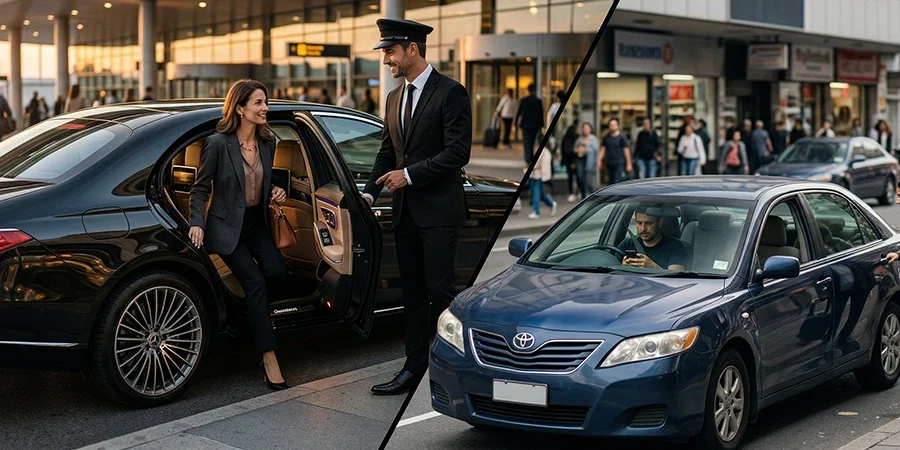
Chauffeur vs Driver: What’s the Real Difference and Why It Matters
If you are trying to understand the chauffeur vs driver difference, here is a simple way to think about it.
A driver is someone who operates a vehicle. Their main job is to take you from one place to another safely.
A chauffeur does much more. A chauffeur is a trained professional who focuses on your comfort, privacy, and overall experience. They do not just drive. They take care of you from the moment you book until the moment you arrive.
When you understand this difference, you can choose the right service for your needs.
Standard Transportation: What a Driver Provides
A driver is someone licensed to operate a vehicle and transport passengers safely from one location to another. Their primary responsibility is navigation and on-time arrival.
Drivers work in different contexts:
- Personal vehicle operators
- Taxi and rideshare platform drivers
- App-based ride services
While many drivers are courteous and helpful, their role focuses on completing the trip efficiently. Extra services, luggage handling, cabin preparation, discretion protocols, typically fall outside their scope.
Beyond the Driver’s Seat: The Chauffeur Professional
A chauffeur is a trained professional hired to provide a high level of service. The title “chauffeur” means driver, but that’s only half the story. A chauffeur does drive, but their real job is to orchestrate the entire travel experience—before you enter the vehicle, during the ride, and through your arrival.
When you hire a chauffeur, you’re hiring someone trained in:
- Professional client care and discretion
- Time and logistics management
- The details that protect your reputation and your schedule
Professionalism and Training: A Key Distinction
One of the biggest differences between a chauffeur vs driver is training.
Driver training
Most drivers meet basic requirements. They need a standard state-issued license. For app-based or taxi services, they may need to pass a background check. However, they usually do not receive formal training in customer service or advanced driving.
Chauffeur Training
Chauffeurs go through much more preparation. According to the New York Department of Motor Vehicles, chauffeurs must hold a commercial driver’s license or a special chauffeur permit that goes beyond a standard driver’s license. Their training often includes:
- Defensive driving and advanced vehicle handling.
- Professional etiquette, such as how to greet clients and speak with respect.
- Discretion and confidentiality, so they know when to speak and when to remain quiet.
- Background checks, regular evaluations, and drug testing.
A common question is whether a chauffeur’s license is the same as a driver’s license. The answer is no. Chauffeurs often hold commercial licenses or additional permits that show they have met higher standards. This is part of what makes them more prepared and accountable.
What You Actually Receive: Function vs. Experience
The core difference boils down to what you’re paying for.
With a driver: You get point-A-to-point-B transportation. The driver navigates, arrives on time, and the trip ends. That’s the job.
With a chauffeur: You receive a managed experience. This includes assistance with doors and luggage, a climate-controlled cabin set to your preference, attention to details like music volume and privacy, and a smooth ride engineered so your comfort, not just your arrival—is the priority.
This distinction matters because it changes what you’re actually buying. A driver completes a task. A chauffeur manages an experience.
Appearance and Presentation Standards
When you see a chauffeur, you know immediately that they are a professional.
Chauffeurs wear formal attire. This often means a suit, tie, and polished shoes. They maintain consistent grooming standards. Their posture and manner are trained to reflect respect and professionalism.
Drivers may wear casual clothes. There is no standard uniform. Their appearance depends on the individual or the company they work for.
If presentation matters to you, a chauffeur is the clear choice.
Vehicle Standards and Care Expectations
The condition of the vehicle is another area where chauffeurs stand apart.
Chauffeur vehicles
- Are inspected and cleaned before every booking.
- Have interiors that are spotless and well-maintained.
- Are prepared with your comfort in mind.
Driver vehicles
- Conditions vary by owner or platform.
- Cleanliness is not always consistent.
- You may find a clean car one time and a less clean car the next time.
If you value consistency and a high-quality cabin environment, a chauffeur service is the better option.
Duty of Care and Passenger Responsibility
A driver’s responsibility centers on one thing: operating the vehicle safely and reaching the destination on time.
A chauffeur’s duty extends far beyond navigation. They anticipate your needs before you ask. They manage timing so you’re never rushed or waiting. They maintain the discretion you need to work, rest, or have private conversations without interruption.
For business travelers and hosted guests, this proactive care is essential. It’s why a chauffeur isn’t just a person who drives—they’re a logistics partner protecting your time and your image.
Legal Training vs Basic Licensing
Let us explain the licensing difference clearly.
A standard driver’s license allows a person to operate a personal vehicle. This is what most people have.
A chauffeur often holds a commercial driver’s license or a special chauffeur permit. These licenses require extra testing and training. They show that the person has met higher standards for safety and responsibility.
So when someone asks “Is a chauffeur’s license the same as a driver’s license?” the answer is no. They are different. The chauffeur’s license represents more training and accountability.
Legal Liability and Insurance Responsibility
This is an important topic that many people do not think about until something goes wrong. Industry standards from organizations like the NLA (National Limousine Association), a trade group representing chauffeured transportation providers, suggest that chauffeur services maintain commercial insurance policies with higher coverage thresholds to protect both the client and the company.
With a chauffeur service
- The company carries commercial insurance.
- Liability is managed at the professional level.
- Coverage limits are usually higher, giving you better protection.
With a standard driver
- Insurance may be personal or tied to an app platform.
- Coverage can change depending on the trip and the driver’s status.
- In some cases, you may have less protection.
If you are traveling for work or hosting guests, knowing that insurance is handled properly gives you peace of mind.
Privacy, Discretion, and Client Confidentiality
What’s a chauffeur known for beyond driving? Discretion.
Chauffeurs are trained to create a quiet, controlled environment. They understand that clients may need to take calls, have confidential discussions, or simply rest without interruption. They follow a client-led approach, meaning they let you set the tone.
Drivers do not have formal training in discretion. Some may be quiet, while others may talk more. There is no standard.
If privacy matters to you, a chauffeur is the right choice.
Experience and Elite Navigation Skills
A chauffeur brings more than a GPS to the road.
Chauffeurs develop route intelligence over time. They know which roads are best for comfort, which routes avoid delays, and how to handle unexpected traffic. They plan so your trip is smooth.
Drivers often rely completely on app directions. If the app gives a poor route, the driver follows it.
For time-sensitive travel, the experience of a chauffeur makes a real difference.
Duties Beyond Driving
What does a chauffeur do that a driver does not?
A chauffeur’s duties include:
- Prepare the vehicle before you arrive.
- Helping with luggage.
- Adjusting cabin settings to your preference.
- Monitor your comfort during the ride.
- Ensuring everything is ready for your departure.
A driver’s duties typically end with driving. They navigate and arrive. The extra steps are not part of their role.
When you hire a chauffeur, you are paying for all of these additional services, not just the drive.
- Not sure yet? Here’s a quick check: If you’re booking for a client, a board meeting, or a wedding, skip the driver. Most corporate policies actually require chauffeured vehicles for liability reasons. Tell us about your trip type at NYC United Limo, and we’ll tell you which service fits.
Choosing the Right Service for Your Needs
Here is a simple way to decide.
Choose a driver if:
- You need basic transportation.
- You are on a tight budget.
- Service extras are not important to you.
Choose a chauffeur service if:
- You value professionalism and presentation.
- You need privacy and discretion.
- You want consistency in vehicle quality.
- You are traveling for business or a special occasion.
- You want insurance and liability handled properly.
A lot of services provide trained professionals, confidentiality standards, insured operations, and consistent service delivery for clients who expect more than just a ride.
Objection Handling: Is a Chauffeur Worth it?
Yes if: Your time is billable, you need privacy for calls, or you’re hosting a client. One late or uncomfortable ride can undo hours of relationship building.
No if: You’re running a 10-minute errand alone, the trip is under 15 minutes in light traffic, or you’re on a strict per-ride budget under $30.
When is it NOT worth it?
Short airport hops where you have no luggage. Late-night personal returns where no one sees you. Any trip where “just getting there” is truly the only goal.
Decision Shortcut – 3 Questions, 30 Seconds
- Does anyone’s opinion of you matter on this trip? (client, boss, date, wedding guest)
- Yes → Chauffeur
- No → Driver
- Do you need to work, talk privately, or arrive unrumpled?
- Yes → Chauffeur
- No → Driver
- Would being 15 minutes late cost you more than $50?
- Yes → Chauffeur
- No → Driver
3+ “Chauffeur” answers → book a chauffeur. 2+ “Driver” answers → book a driver.
Cost vs. Value – Real numbers (major U.S. city, 10-mile trip)
Value framing: A chauffeur costs 3 to 4x more than a driver, but if your time is worth $75/hour, the 20 minutes a chauffeur saves you in waiting/parking/stress covers the difference entirely.
| Service Type | Typical Cost | Includes |
| App-based driver (UberX/Lyft) | $18–$25 | Basic A-to-B |
| Taxi | $22–$30 | Meter + tip |
| Chauffeur sedan service | $65–$95 | 15 min waiting, luggage, water, phone charger, commercial insurance |
| Chauffeur SUV/stretch | $120–$200 | Full privacy partition, refreshments, formal attire |
Frequently Asked Questions
Are chauffeurs trained differently from regular drivers?
Yes. Chauffeurs receive formal training in driving, etiquette, and discretion. Regular drivers typically do not.
Is a chauffeur service always more expensive?
It is usually higher in cost because it includes commercial insurance, vehicle preparation, and a higher level of service. You pay for what you receive.
What is the practical difference between app-based drivers and chauffeurs?
App-based drivers focus on completing trips quickly. Chauffeurs focus on your comfort, privacy, and the overall experience from start to finish.
Do taxis and on-demand drivers offer the same experience?
No. Taxis and on-demand services provide basic transport. A chauffeur provides a structured, professional service with attention to detail.
In which situations does one clearly outperform the other?
A chauffeur is better for corporate travel, VIP events, and any situation where image, timing, and care are important. A driver may be suitable for everyday errands where only basic transportation is needed.