You need to get from Philadelphia to Newark, and you need to be there on time. The problem isn’t a lack of options; it’s that most travel guides list journey times without telling you what those times look like in the real world, at 7:30 am on a Monday, with the New Jersey Turnpike at full choke.
That gap costs travelers. A “90-minute drive” that becomes 2.5 hours. A surge-priced rideshare when you needed a confirmed pickup. A cheap bus that arrives 40 minutes late to an airport connection you can’t miss.
This guide gives you the complete breakdown of every realistic option, what each one actually costs, how long it takes under real conditions, and which one fits your specific situation.
Quick Answer: When planning how to get to Newark from Philadelphia, travel time ranges from 55 minutes to 2.5 hours, depending on your transport choice and departure timing. The train is the fastest and most consistent option. Driving is flexible but exposed to Turnpike congestion, particularly around the Newark interchange, which no map app accounts for accurately.
At-a-Glance Comparison: Fastest vs Cheapest vs Most Reliable
Option | Journey Time | Cost Range | Transfers | Reliability |
Amtrak Northeast Regional | 55 min – 1 hr 15 min | $19 – $80 | 0 | High |
NJ Transit | 1 hr – 1 hr 30 min | $15 – $30 | 0 | Medium |
Private Car Service | 1.5 – 2 hrs | $120 – $180 | 0 | Very High |
Rideshare (Uber/Lyft) | 1.5 – 2.5 hrs | $80 – $140+ | 0 | Medium-Low |
Bus (FlixBus/Greyhound) | 1 hr 35 min – 2 hrs 30 min | $13 – $45 | 0 | Low-Medium |
Self-Drive | 1.5 – 2.5 hrs | Fuel + tolls | 0 | Variable |
All pricing reflects typical 2024 to 2025 averages based on Amtrak Northeast Regional published fares, NJ Transit ticket pricing, Port Authority of New York and New Jersey parking rates at EWR, and real-time rideshare estimates across weekday peak and off-peak hours.
Train Travel: Fastest and Most Consistent Option
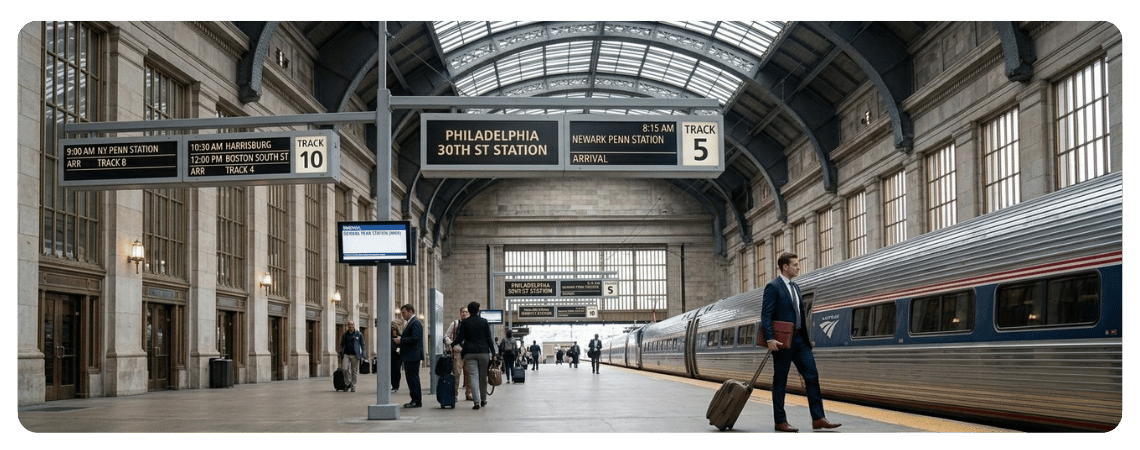
The train is the strongest option for most travelers on this route. It bypasses road traffic entirely, runs on a fixed published schedule, and delivers you to Newark Penn Station in the center of the city with no transfers.
Amtrak Northeast Regional is the faster of the two rail options. Journey times from Philadelphia 30th Street Station to Newark run 55 minutes to 1 hour 10 minutes, with the fastest trains completing the trip in around 53–56 minutes. Trains depart as early as 5:11 am and as late as 11:40 pm, with 51 services per day. The cheapest advance fares start from $11, with an average ticket price around $36. Booking even a week ahead consistently yields lower fares than same-day purchase, based on Amtrak’s dynamic pricing model.
NJ Transit is the more affordable rail alternative, offering frequent service with fares and schedules available through official sources. Journey times run from 1 hour to 1 hour 30 minutes, depending on your service. For travelers without a fixed arrival deadline who want to keep costs down, NJ Transit covers the route reliably.
Both services depart from Philadelphia 30th Street Station and arrive at Newark Penn Station, no connections, no platform transfers, no guesswork.
If the train’s fixed departure times don’t work for your schedule, the next option gives you door-to-door flexibility with no timetable at all.
When You Need Door-to-Door Certainty
For travelers evaluating how to get to Newark from Philadelphia with complete reliability, a pre-booked private car service offers the most direct option. It picks you up at your address and drops you exactly where you need to be in Newark, whether that’s a hotel, office, or specific building. There is no parking to sort, no Turnpike navigation, and no uncertainty about arrival.
Fixed pricing agreed at the time of booking means there are no surge fees regardless of when you travel. For business travelers, executives, or anyone with a specific arrival requirement, this option removes every variable from the journey. Journey time is typically 1.5 to 2 hours under normal conditions. For a sedan, expect a fixed fare in the $120 to $180 range, higher than the train, but the only option on this list that guarantees door-to-door service at a price that doesn’t change.
If flexibility and last-minute booking matter more than certainty, rideshare is the next most convenient option, though it comes with trade-offs worth knowing.

By Rideshare: Convenient, but Without Guarantees
Uber and Lyft cover this route with no advance planning required. Standard fares run $80 to $140 under normal conditions. The risk is surge pricing: weekday mornings, Friday afternoons, and any event-day period in Newark or Philadelphia can push costs significantly higher with no ceiling.
For a casual trip with a flexible schedule, rideshare is a reasonable choice. For anything time-sensitive or professionally important, a flight connection, a client meeting, a pickup with someone waiting, the lack of guaranteed pickup time, fixed pricing, or vehicle quality is a real exposure that the other options on this list eliminate.
If keeping costs as low as possible is your priority and your schedule has room to flex, the bus option below is worth knowing.
The Budget Route (With a Catch)
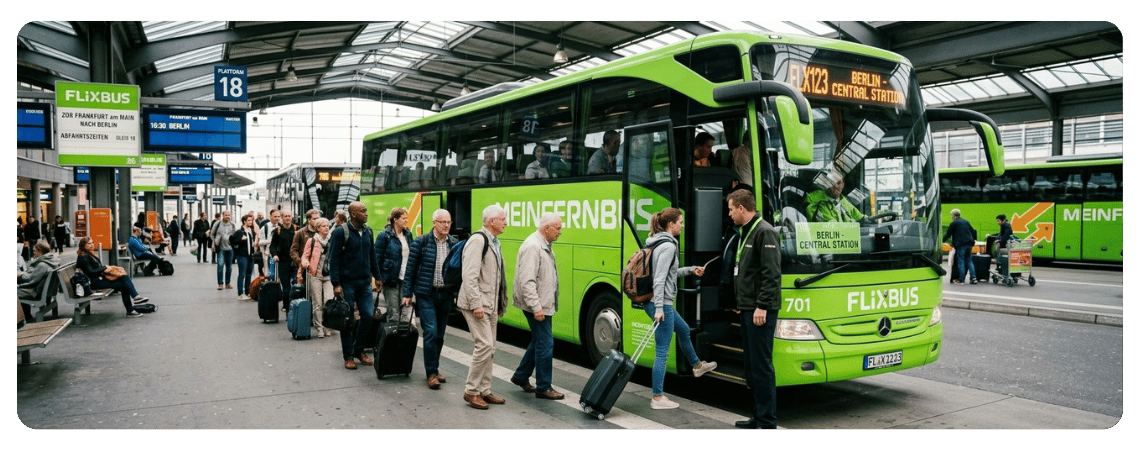
FlixBus, Greyhound, and Peter Pan Bus Lines all operate Philadelphia to Newark services. FlixBus tickets start from $18.48 when booked in advance, with services running from 12:20 am through to 10:30 pm. The average bus ticket price across providers is around $23, with the average journey time approximately 1 hour 35 minutes to 1 hour 48 minutes.
Bus services share the same road as every other vehicle on the route. When the New Jersey Turnpike slows near Newark, bus journey times extend without warning. Average travel time by bus from Philadelphia to Newark runs around 2 hours 10 minutes, with the actual time varying based on traffic and road conditions. For solo travelers with no specific arrival window and a priority on cost, the bus is a genuine option. For anyone with a connection to catch, the unpredictability is a real consideration.
If you need maximum luggage space or are traveling in a group, driving yourself offers control none of the above options provide, but the true cost is higher than most travelers account for.
Driving Sounds Simple, Until It Isn’t
Driving your own vehicle gives you complete schedule flexibility and no luggage constraints. The route via I-95 North and the New Jersey Turnpike is straightforward under normal conditions.
The real cost adds up. The NJ Turnpike’s full-route E-ZPass toll for a passenger car runs approximately $13.85. Add fuel and downtown Newark parking, typically $25 to $40 per day for longer stays, and self-driving becomes the most expensive option on this list for anything beyond a very short trip. Use the NJ Turnpike Authority toll calculator to calculate your exact toll before you leave.
What Most Philadelphia to Newark Travel Guides Skip
If you’re figuring out how to get to Newark from Philadelphia, these are the practical details that actually determine whether your trip goes smoothly.
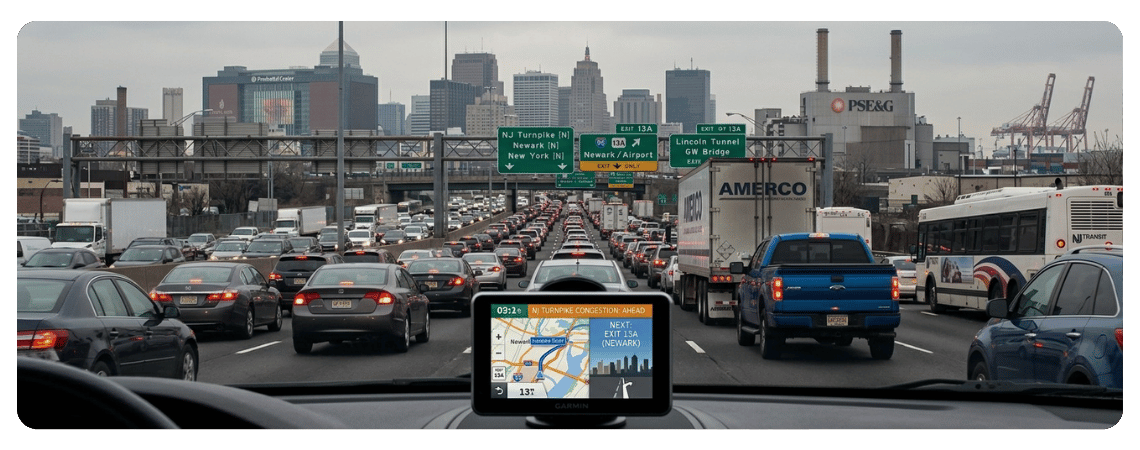
- The Turnpike interchange near Newark is the single biggest delay risk on any road-based journey. The Newark Bay Extension at Exit 14, which carries I-78 and connects Newark with Jersey City, has a design limited to four lanes with a shoulderless Jersey barrier divider. At peak hours, this bottleneck can add 30 to 45 minutes to a drive that looked straightforward on a map.
- The train’s advantage isn’t just speed, it’s consistency. A drive listed as 90 minutes at 10 am on a Tuesday can run 2.5 hours at 7:30 am on a Monday. The train delivers the same journey time regardless of what the Turnpike is doing.
- Advance Amtrak booking makes a measurable difference. The cheapest Amtrak tickets on this route start from $11, while same-day fares average closer to $36 or more. Booking even a week ahead consistently puts you at the lower end of that range.
- Newark Penn Station is easy to navigate upon arrival. The station provides access to Newark Light Rail, PATH rapid transit linking Newark to Manhattan, and NJ Transit commuter trains serving the wider New Jersey area. Rideshare and taxi pickups are available at the station entrance for destinations further out.
Best Time of Day to Travel This Route
Before 9:00 am: The train is the cleanest choice. Amtrak and NJ Transit run early services that avoid road traffic entirely. The Turnpike is open from 6:30 am on weekdays and can add 45 minutes to any road journey without warning.
10:00 am to 2:00 pm: Every option performs at its best. Traffic is lighter, trains are frequent, and the journey is as predictable as it gets. If your schedule allows it, this is the window to target.
3:00 pm to 8:00 pm: Turnpike congestion peaks. Budget at least 45 minutes of extra time for any road-based option. The train removes this risk entirely and is the strongest choice for late afternoon travel.
After 9:00 pm: Train frequency drops and bus schedules thin out. Check NJ Transit’s evening schedule before planning a late departure. A pre-booked car service or rideshare is the most practical option after this window.
Which Option Fits Your Situation
- Fastest, no transfers: Amtrak Northeast Regional. Philadelphia 30th Street to Newark Penn in under 75 minutes.
- Lowest cost, flexible timing: FlixBus or NJ Transit. Reliable for most trips, slower than Amtrak.
- Business travel or fixed arrival time: Pre-booked private car service. Fixed price, confirmed vehicle, door-to-door.
- Last-minute, flexible schedule: Rideshare. Convenient for casual travel with no specific arrival window.
- Heavy luggage or group travel: Private car service or self-drive. The train handles bags, but a direct vehicle is easier.
- Peak rush-hour road travel: Budget an extra 45 minutes regardless of which road option you choose.
Frequently Asked Questions:
What is the fastest way to decide how to get to Newark from Philadelphia?
Amtrak Northeast Regional is the fastest option, covering the route in 55 minutes to 1 hour 15 minutes with no transfers. It departs from Philadelphia 30th Street Station and arrives at Newark Penn Station.
How much does the train cost?
Amtrak fares on this route start from $11 when booked in advance, with the average ticket around $36. NJ Transit is cheaper on average; check current fares on the official website. Both run direct from Philadelphia 30th Street to Newark Penn with no transfers.
Is driving or taking the train better?
For most travelers comparing how to get to Newark from Philadelphia, the train is the better choice. It is faster, more consistent, and removes the Turnpike congestion variable entirely. Driving makes sense if you need complete flexibility, are carrying significant luggage, or are traveling beyond Penn Station. For a more private, direct experience, some travelers also consider premium car services such as NYC United Limo.
What is the cheapest way to get from Philadelphia to Newark?
FlixBus tickets start from $18.48 when booked in advance, making it the lowest-cost option on the corridor. For anything time-sensitive, the small fare difference versus Amtrak is worth paying.
Is there a direct service with no transfers?
Yes. Both Amtrak Northeast Regional and NJ Transit run direct services from Philadelphia 30th Street Station to Newark Penn Station with no transfers required.